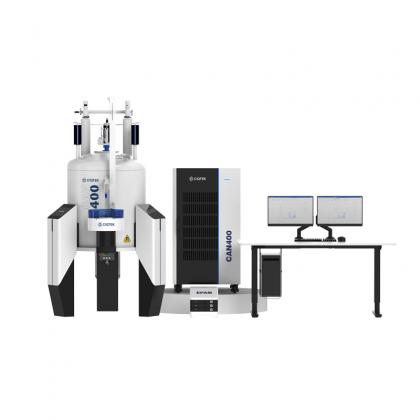
CIQTEK CAN400 NMR Spectrometer Becomes a Trusted Research Partner at China Pharmaceutical University
May 19, 2026
CIQTEK CAN400 NMR Spectrometer Becomes a Trusted Research Partner at China Pharmaceutical University
Some NMR labs are busy. And then there are labs like the one at China Pharmaceutical University, where the instruments run around the clock, bookings stretch past midnight, and the sample queue fills every available slot.
In that kind of environment, the instrument at the center of it all has to deliver. Clean spectra, day after day. No downtime. And it has to be simple enough for graduate students to run on their own during those late-night shifts.
At China Pharmaceutical University (CPU), the CIQTEK CAN400 NMR spectrometer has met all of these demands. After nearly a year of continuous, high-volume operation, it has become a workhorse in the university's testing platform. It handles over 100 samples per day. It has maintained a zero-failure record. And perhaps most importantly, the researchers who rely on it say the data looks great.
In this article, we will walk through how CPU selected the CAN400, how it has held up in one of the busiest academic NMR labs around, and why the day-to-day details matter just as much as the numbers on a spec sheet.
Why NMR Spectroscopy Sits at the Heart of Pharmaceutical Research
To understand why CPU needed a dependable NMR system, it helps to know what kind of institution this is.
China Pharmaceutical University sits at the foot of Zhongshan Mountain, along the Yangtze River in Nanjing. It was founded over eighty years ago, and it has built a reputation as one of the top schools for pharmaceutical research and education in China. The university's pharmacy program earned an A+ rating in China's most recent national discipline evaluation. Its medicinal chemistry program has been ranked first in China and third globally, with a long history of producing influential research in drug design, molecular synthesis, and bioactive compound modification.
At the heart of all this is organic chemistry. Every new drug candidate starts as a molecule that someone has to design, synthesize, and then characterize. That is where NMR spectroscopy comes in. For medicinal chemists, NMR is not a nice-to-have tool. It is the primary method for confirming molecular structures, assessing purity, and collecting the analytical data that supports publications and patent filings.
So it is no surprise that the NMR lab at CPU is one of the busiest places on campus. The spectrometers run twenty-four hours a day. Students and faculty carry NMR tubes in and out of the lab at all hours. For countless research projects, the NMR spectrum is the first real data point that tells a researcher whether their synthesis worked. It is the bridge between an idea and a verified result.
Given this workload, the university needed an instrument that could keep up. Solid technical performance. Continuous operation without issues. And it had to be easy enough for anyone to use, from first-year grad students to senior faculty.
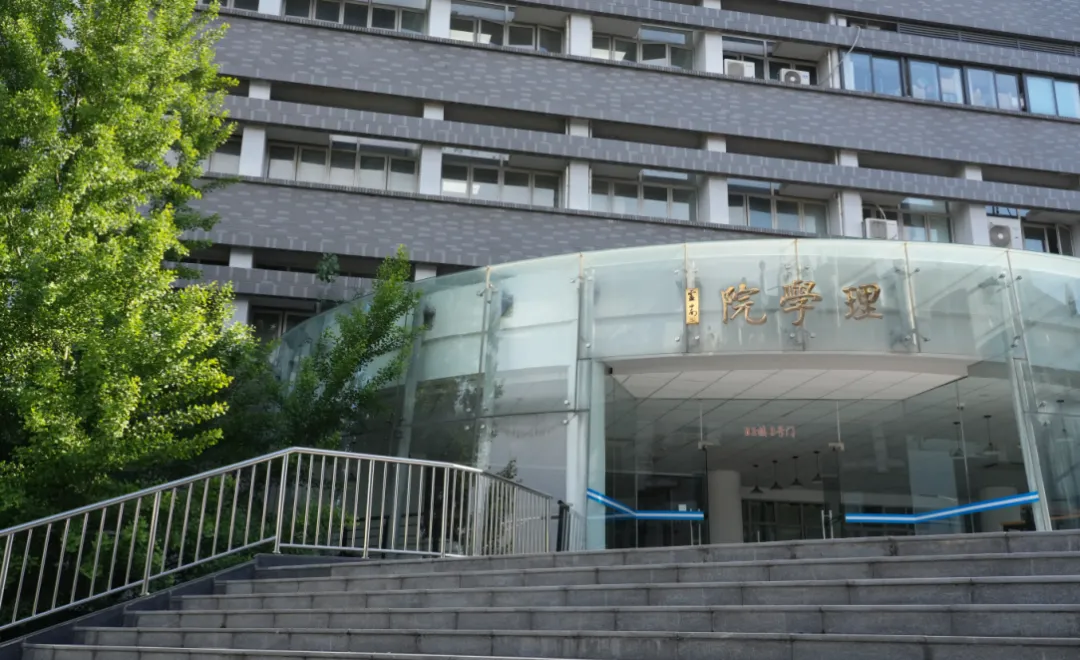
The College of Science building at China Pharmaceutical University, where the CIQTEK CAN400 NMR spectrometer is housed.
How CPU Chose the CAN400: A Data-Driven Decision
Selecting a new NMR spectrometer is not a decision any major research university takes lightly. The instrument has to meet rigorous technical standards, integrate smoothly into an already busy workflow, and prove it can deliver reliable results over the long term.
The CPU team did their homework. They investigated multiple options, evaluated technical backgrounds, and, in their own words, put real data above everything else.
Technical Credibility Built on Years of EPR Experience
One factor that caught the team's attention was CIQTEK's established track record in electron paramagnetic resonance (EPR) spectroscopy. CIQTEK has been a leading EPR instrument provider in the Chinese market for years, with consistent market share and a solid base of installed systems.
EPR and NMR are distinct techniques with different applications, but they share the same underlying magnetic resonance principles. Both require highly uniform magnetic fields. Both depend on carefully designed radio frequency pulses. And both need sophisticated signal collection and processing to produce usable data.
Think of it this way: building a reliable EPR system and building a reliable NMR system draw from the same engineering playbook. The same fundamentals. The same attention to field stability and signal integrity. So when the CPU team looked at CIQTEK's history with EPR, they saw a company that had already solved many of the hardest problems in magnetic resonance instrumentation.
The CPU team saw the connection. Expertise in one branch of magnetic resonance technology translates into meaningful capabilities in another. The same engineering discipline that produces dependable EPR systems applies directly to the challenges of building a robust NMR platform.
"We Looked at the Real Numbers"
Beyond technical lineage, the CPU team wanted proof. They examined the CAN400 directly, comparing measured data against their requirements point by point.
Resolution. Signal-to-noise ratio. Baseline flatness. These are the metrics that determine whether an NMR spectrum is usable or not. The team studied the actual output from the CAN400 and verified each critical parameter for themselves.
"You have to see it with your own eyes," the lead researcher explained. "Whether the spectra are good, whether the instrument is reliable, data does not lie."
This emphasis on real, verifiable performance data rather than marketing claims ultimately led CPU to choose the CAN400. It was a decision grounded in evidence, and it set the stage for what happened next.
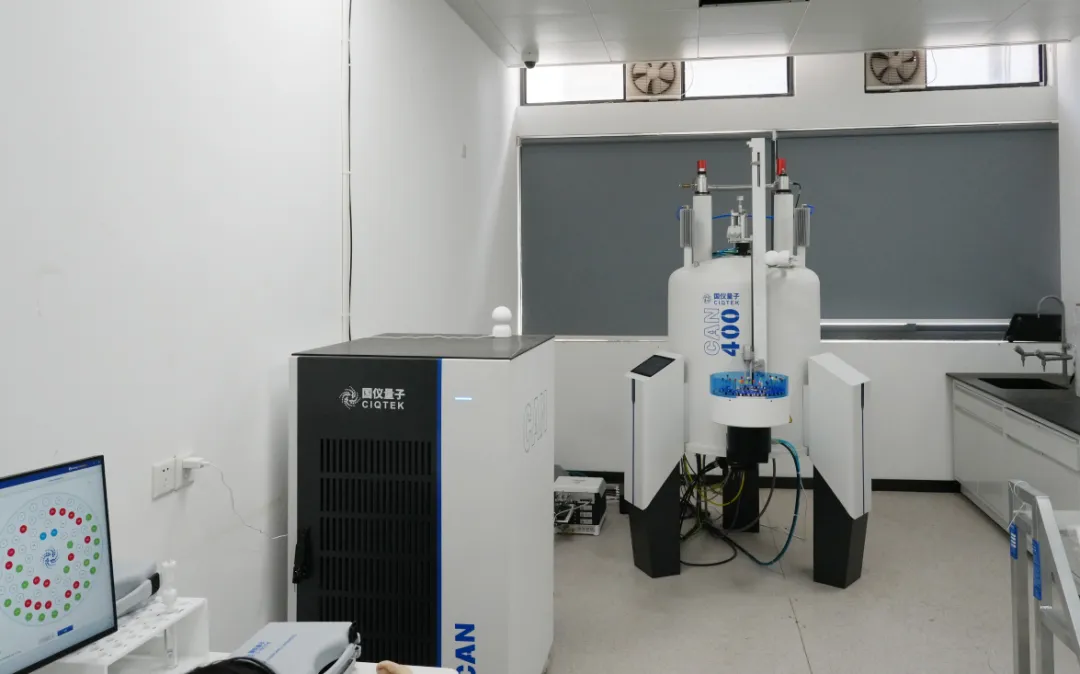
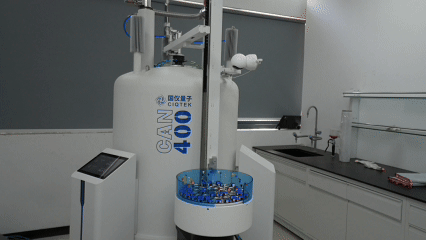
A real life view inside the NMR lab at the College of Science, China Pharmaceutical University.
24/7 Operation in a Real-World Research Environment
Once the CAN400 was installed and calibrated, it did not sit idle. It immediately joined the front line of CPU's analytical services and quickly became one of the busiest instruments in the facility.
Fully Booked Around the Clock
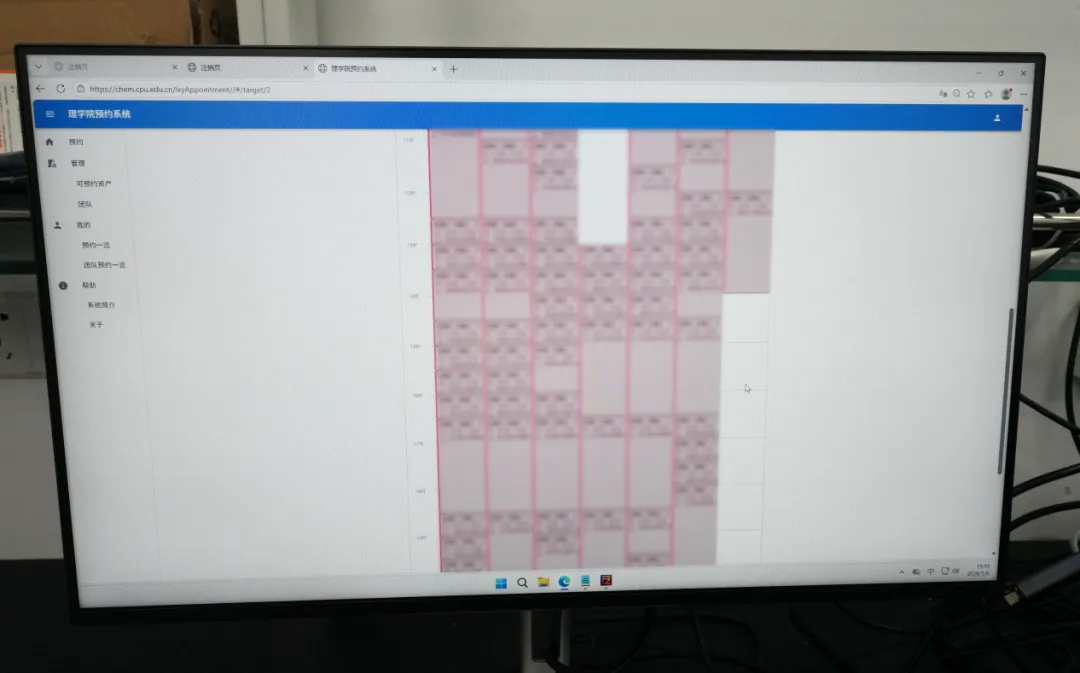
Within the university's online booking system, CAN400 time slots fill up fast. Reservations extend deep into the evening. Even the midnight hours are booked solid. The demand reflects both the volume of research underway at CPU and the confidence users have in the instrument.
To date, the CAN400 has operated continuously for nearly a year. It processes an average of more than 100 samples every day. That kind of throughput, sustained over months, is a meaningful test of any analytical instrument. The CAN400 has passed it without a single fault.
What the Users Say About the Data
Technical specifications only tell part of the story. The real measure of an NMR spectrometer is whether the people using it trust the results.
At CPU, the feedback has been consistently positive. Faculty and students alike comment on the quality of the spectra the CAN400 produces.
"The spectra come out beautifully," one lab manager noted. "The peak splitting is sharp and clear."
Clear peak resolution matters. In organic synthesis, a clean spectrum with well-resolved splitting patterns means a researcher can confidently assign structures, identify impurities, and move forward with their work. Fuzzy or noisy data, by contrast, creates uncertainty and delays.
Stability That Supports Research Momentum
Beyond spectral quality, the CPU team points to something equally valuable: stability. Since the day it went online, the CAN400 has maintained a zero-failure operating record.
"Very stable," a faculty member summarized. Just two words, but in a high-throughput shared facility, stability carries enormous weight.
When an instrument runs without unexpected downtime, lab schedules become predictable. Graduate students can plan their experiments with confidence. Lab managers can plan their weeks without surprises. And when equipment runs this smoothly, the whole lab benefits.
At a research-intensive school like CPU, that kind of reliability means more work gets done, period.
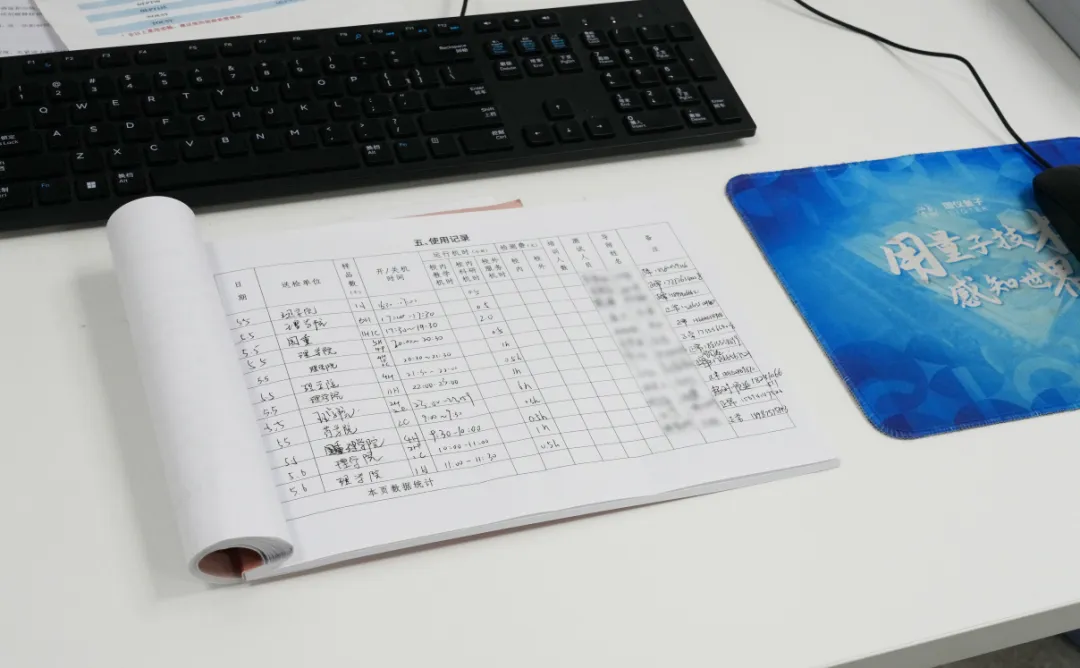
Apart from reserved maintenance windows, all CAN400 time slots in the booking system are completely filled.
Design Details That Make Daily Work Easier
A spectrometer can have top-notch magnets and cutting-edge electronics, but if it is a pain to use day after day, it is not worth much. The CPU team found that the CAN400 pays attention to the small things that make a big difference in a shared facility.
Dual-Channel Autosampler with a Smart Waiting Position
One feature that has drawn consistent praise is the CAN400's dual-channel autosampling system with a dedicated waiting position.
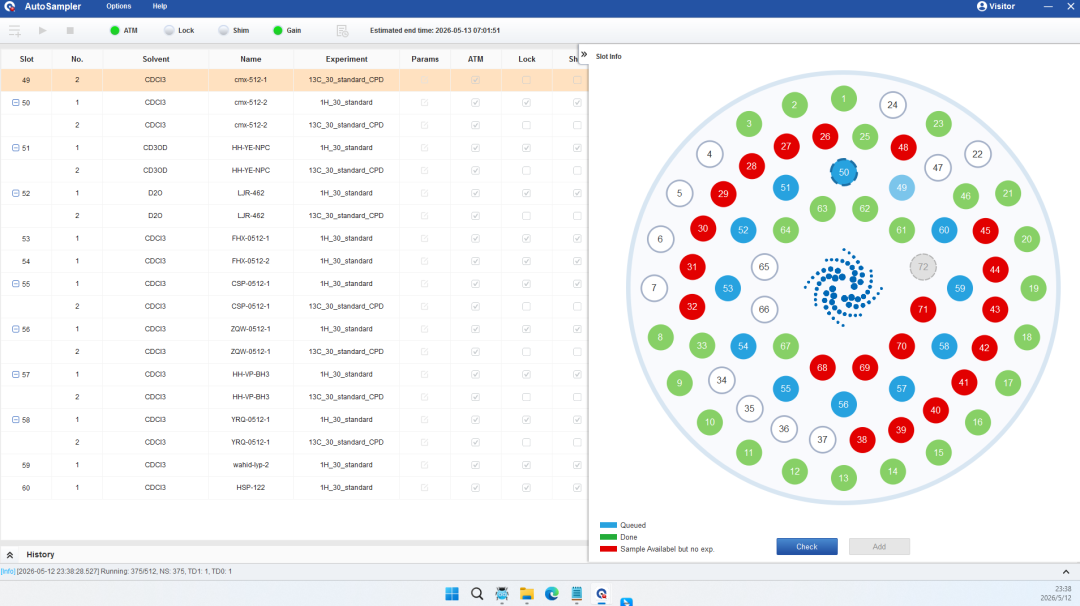
Here is how it works. The system runs two sample channels, allowing rapid pre-loading. When one measurement finishes, the instrument automatically switches to the next sample. The completed sample moves to a waiting position rather than sitting in the measurement bay.
This design compresses the dead time between runs. Users spend less time waiting for their slot, and the instrument spends more time collecting data. For a public testing platform where demand always exceeds supply, that efficiency gain is significant. The same calendar day now accommodates more users and supports more projects.
In practical terms, this means a graduate student who books a 10 PM slot can show up, load their sample, and get their data without delays caused by the previous user still removing their tube. The workflow is smoother, faster, and less stressful.
Software That Students Can Actually Use
The CAN400 runs on CIQTEK's Qspin operating system. At CPU, users found the interface notably approachable.
The layout is clean and simple. Functions are organized intuitively. Students select their experiment number, place their sample, and submit the task. The learning curve is short.
"Students can use it. That matters a lot," one facility manager emphasized.
This observation carries more weight than it might seem at first. NMR spectrometers in academic settings are not personal instruments. They are shared resources that rotate through dozens of users each week. During weekdays, a staff member may be available to assist. But at night and on weekends, students often operate the system independently.
If the software is confusing or requires extensive training, two things happen. Some students avoid the instrument altogether, which wastes available capacity. Others attempt to use it but make mistakes, which wastes instrument time and can compromise data quality.
The Qspin system keeps the workflow straightforward. That means the CAN400 stays accessible to everyone, whether they are a first-year student or a seasoned researcher. That accessibility directly supports the high utilization rate the instrument has achieved at CPU.
The software interface of the CIQTEK NMR auto sampler system.
What This Partnership Means Going Forward
The CAN400 was not selected because of a spec sheet alone. It was chosen after careful evaluation of real performance data. It earned its place in the lab through months of stable, high-volume operation. And it has won over users because it performs the essential task (producing clean, reliable spectra) while remaining practical to operate.
For CIQTEK, the CPU installation demonstrates what the company set out to prove: that a strong foundation in magnetic resonance technology, combined with attention to user-facing design details, can produce an NMR spectrometer that competes on both performance and usability.
For CPU, the CAN400 has become an integral part of the research infrastructure. It supports the daily work of medicinal chemists, organic chemists, and the next generation of pharmaceutical scientists who train in these labs. The instrument helps turn hypotheses into verified molecular structures, and structures into publishable results.
Looking ahead, CIQTEK plans to continue refining its NMR product line, expanding service capabilities, and building on the field experience gained at sites like CPU. For research institutions evaluating NMR options, the message from CPU is straightforward: look at the data, watch how the instrument performs under real workload, and pay attention to the details that affect daily use. Those criteria led CPU to the CAN400, and so far, the instrument has delivered.
¡No dude en contactarnos para obtener más detalles, solicitar una cotización o reservar una demostración en línea! Le responderemos tan pronto como podamos.